
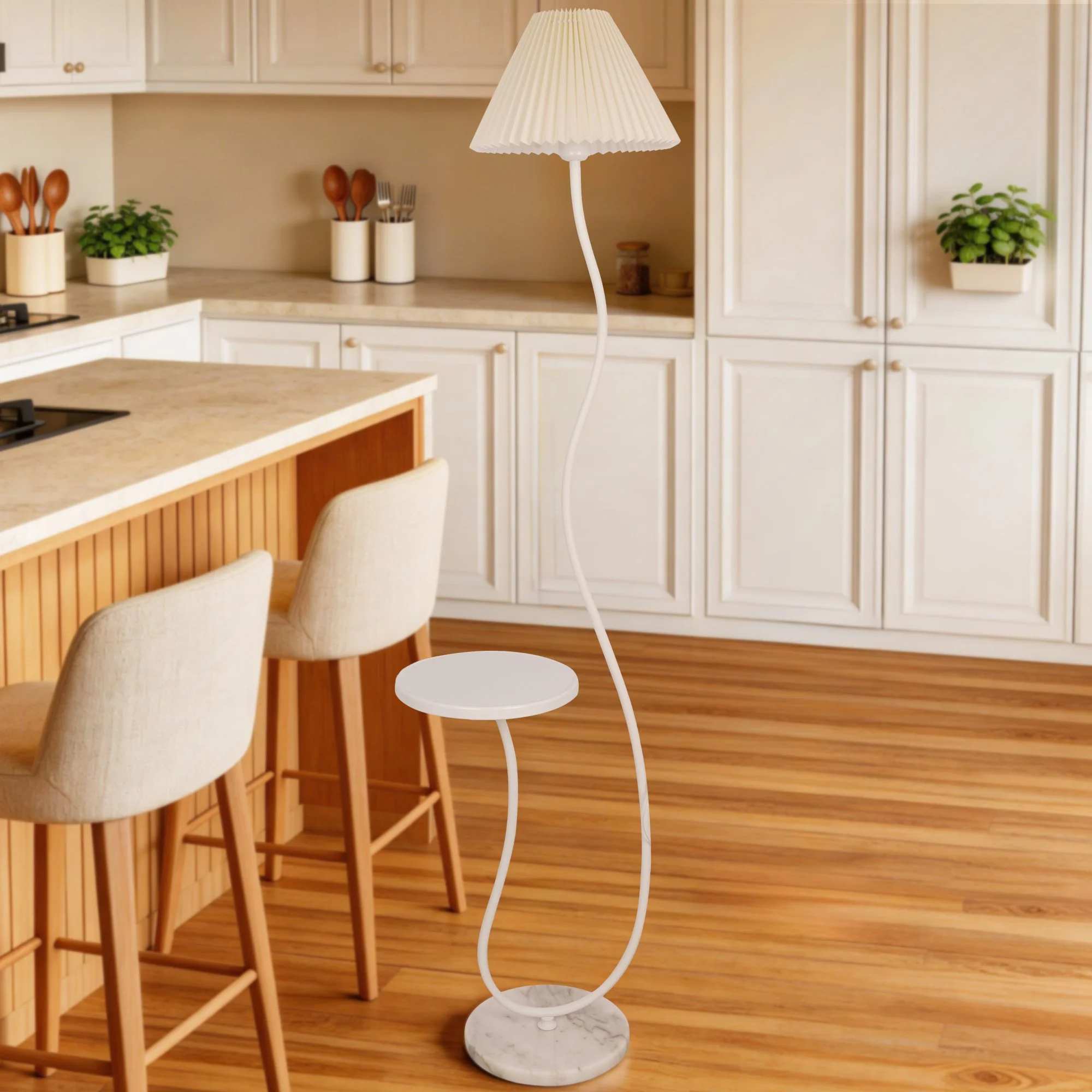
Some pieces of furniture earn their place by doing two jobs in the space of one. A floor lamp with side table is exactly that: a full-height reading and ambient light with a small, stable table built into its stand, sized for a book, a cup of tea, a phone on charge or the remote that otherwise disappears into the sofa cushions. For small living rooms, reading corners and bedrooms short on surface space, it solves two problems with a single footprint and a single power outlet.
But combination pieces only work when both halves are sized properly. A table set too high, a shade at the wrong height for reading, or a base that wobbles every time you set down a mug will annoy you daily. This guide covers what to check before you buy, so the lamp you choose works as well as it photographs.
Why Combine a Lamp and a Table at All?
The obvious saving is floor space. A separate floor lamp and side table need two footprints, two positions and enough clearance between them; the combined version needs one spot, usually the dead corner beside a sofa arm or armchair where neither piece quite fits alone. That makes a floor lamp with side table a natural fit for apartments, guest rooms and any seating spot that is not against a wall with room for a full table.
There is also a practical lighting benefit. The light source sits directly above or beside the surface you are using, at a height chosen for it, so reading light lands on the page rather than coming over your shoulder. And because the table is part of the lamp, there is no gap for books and cups to fall into, and no second piece to knock when you reach for the switch in the dark.
Table Height: Match It to Your Seat
The single most important measurement is the height of the built-in table relative to the seat next to it. The table surface should sit at roughly the height of the sofa or chair arm, or an inch or two below it, so you can set a drink down without reaching up or dropping your hand far below the armrest. Most sofa arms fall between 24 and 30 inches from the floor, so tables in that band suit most seating.
Check this against your actual furniture before ordering, because a table that lands four inches above the arm feels like a shelf you have to lift things onto, and one far below the arm hides your book under the armrest line. If the lamp will serve a bed instead, aim for a table height close to the top of the mattress, the same rule you would use for a nightstand.
For a worked example, the 63-Inch White Floor Lamp with Side Table DS-LY19 stands 63 inches overall, a standard floor lamp height, with its table set at sofa-arm level and a weighted marble base, which is the combination of proportions most living rooms need. You can compare it with other heights and finishes in our lamps collection.
Shade Height and Reading Comfort
With overall height around 58 to 66 inches, the bottom of the shade should end up near shoulder height when you are seated, so the bulb is hidden from your eyes but light falls across your lap and book. If the shade sits too high, you see the bare bulb from the chair; too low, and the light pool shrinks to a small circle.
Shade material changes the quality of that light. Linen and fabric shades diffuse light softly in every direction, suiting ambient-plus-reading use and relaxed rooms. More opaque shades push light up and down in focused pools, better for a dedicated reading chair. Pleated fabric designs sit in the middle, softening glare while still directing useful light downward onto the table and your page.
Also check the switch position. A line switch on the cord, a foot switch, or a switch on the lamp body you can reach from the seat without standing are all workable; a switch you have to get up for will be resented within a week. Models with three colour temperature settings let the same lamp serve bright reading light in the evening and a warmer ambient glow later at night, which suits a piece that lives in a main seating area.
Table Size, Base and Stability
The tables on these lamps are deliberately small, typically 10 to 14 inches across, which is enough for a mug and a paperback, or a phone and a small plant, but not for a laptop and a dinner plate. Decide honestly what yours must hold. If the answer includes a laptop, you need a larger separate table and this style is not your piece. If the answer is a drink, a book and a phone, the built-in size is not a compromise at all, it is the point.
Stability comes from the base, not the pole. A weighted base, stone or marble being the most effective, keeps the lamp steady when the table is loaded unevenly, which it usually is: a heavy book at the table edge is exactly the load that tips a light, hollow base. Test product descriptions for base material and overall weight, and place the lamp so the table section faces the seat, with the base fully on the floor surface rather than half on a rug edge.
Where a Floor Lamp With Side Table Works Best
The classic position is beside a sofa or reading chair, table toward the seat, shade above shoulder height. The same logic works beside a bed in a room without space for two nightstands, in a nursery chair corner where a surface for a bottle and a soft light are both needed at 3 a.m., and in a home office corner chair that has light but nowhere to put a notebook down.
It works less well as the only light source in a large room, where any single floor lamp, combined or not, leaves the far corners dark, and it should not be asked to replace a full dining or desk surface. Treat it as a seating accessory with excellent light, and it will not disappoint.
What to Check Before You Buy
Run through five checks. One, table height against your sofa arm or mattress top. Two, overall height and shade position against seated shoulder height. Three, base material and total weight for stability, especially in homes with children or large dogs. Four, bulb type and switch position: a standard E26 socket gives you the widest bulb choice, and the switch must be reachable from the seat. Five, cord length and outlet position, since the lamp's one fixed spot has to reach power without a trailing extension lead.
A floor lamp with side table is not a novelty piece. Chosen with those measurements in hand, it is one of the most space-efficient upgrades a small seating area can get: light where you read, a surface where you need it, and nothing extra on the floor.
Styling It Without Clutter
Because the table surface is small, it rewards restraint. One practical rule is to keep it to three things at most: something to drink, something to read, and one small personal item such as a plant, a candle or a framed photo. Grouping those few items toward the back of the table leaves the front edge clear as a landing spot, which is what you actually use day to day. If the lamp stands in a guest room, leave the surface almost empty on purpose; a clear surface with good light is the detail guests remember as thoughtful. Matching the shade colour to curtains or cushions, rather than to the table finish, usually ties the piece into the room more naturally, and a warm-white bulb keeps fabric shades looking creamy rather than grey in the evening.
Ready to find the right height for your sofa? Browse our lamps collection and compare table heights, shades and base styles side by side.